Growth finance · 8 min read
Revenue-Based Finance in the UK: Juice, Wayflyer, Outfund & More Compared
· By Alex Lawford
Your best-selling SKU is about to sell out. Q4 is six weeks away. Your ads are working. And your cash is sitting in a shipping container somewhere off Felixstowe.
Every growing ecommerce brand hits this wall eventually. Demand outruns cash. Banks want three years of accounts and a charge over your house. VCs want a slice of the company you've spent years building.
Revenue-based finance (RBF) sits in the middle. A lender looks at your live sales data, advances you cash, and gets paid back from the revenue that cash helps you earn. No equity given up. No waiting months for a credit committee.
But "revenue-based finance" now covers some very different products. Pick the wrong one and a cheap-looking deal can cost you more than a bank loan would. Here's how the main UK players compare, and how to choose.
First, know which model you're buying
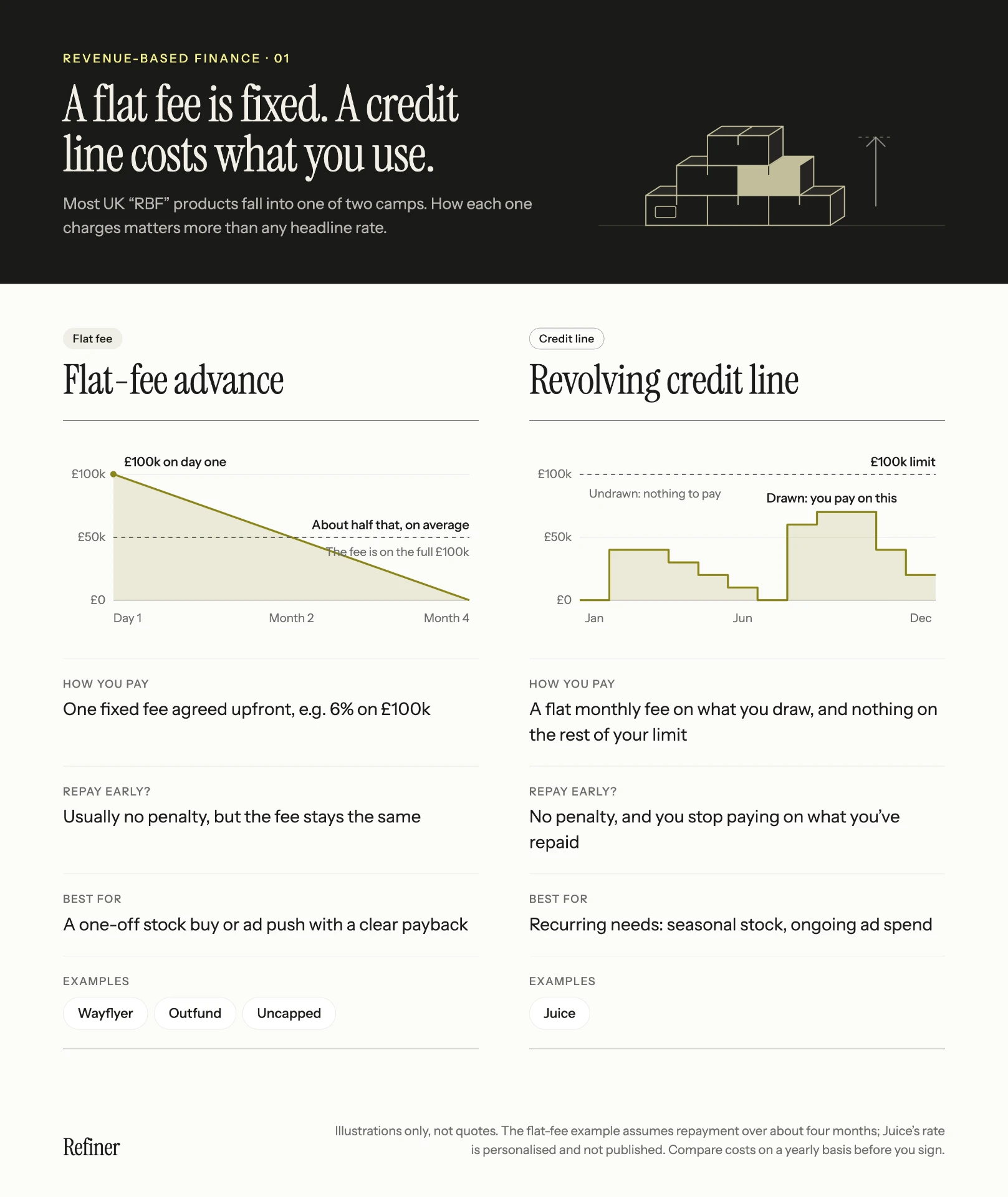
Most UK "RBF" products fall into one of two camps. The difference matters more than any headline rate.
| Comparison | Flat-fee advance | Revolving credit line |
|---|---|---|
| How it works | One lump sum, repaid from your sales or in instalments | Draw what you need, repay, draw again |
| How you pay | One fixed fee agreed upfront (e.g. 6%) | A flat monthly fee on what you draw, and nothing on the rest of your limit |
| Repay early? | Usually no penalty, but the fee stays the same | No penalty, and you stop paying on what you've repaid |
| Best for | A one-off stock buy or ad push with a clear payback | Recurring needs: seasonal stock, ongoing ad spend |
| Examples | Wayflyer, Outfund, Uncapped | Juice |
The trap with flat fees is that they look cheaper than they are. Take a £100k advance with a 6% fee, repaid in equal daily amounts over four months. You pay £6k, but you only hold the full £100k on day one. On average you hold only about half of it, so as an annual percentage rate (APR) that works out at about 42%.
Compare that with a credit line charging 1.5% a month, but only on what you've drawn and only while it's drawn: an APR of about 20%. Use it the same way, drawing £100k and repaying it evenly over four months, and you'd pay about £3k instead of £6k. Any part of your limit you don't use costs nothing. Same "headline" feel, very different cost. Always ask each lender for an annual percentage rate, or work one out, before you compare.
How we worked these out: both figures are APRs, which annualise the cost with compounding, so they compare like for like. A flat fee costs more than it looks because you repay as you go: you hold the full £100k on day one but only about half of it on average. The flat-fee example assumes equal daily repayments over four months; repay faster and the APR rises, slower and it falls. These are illustrations, not quotes.
The UK line-up
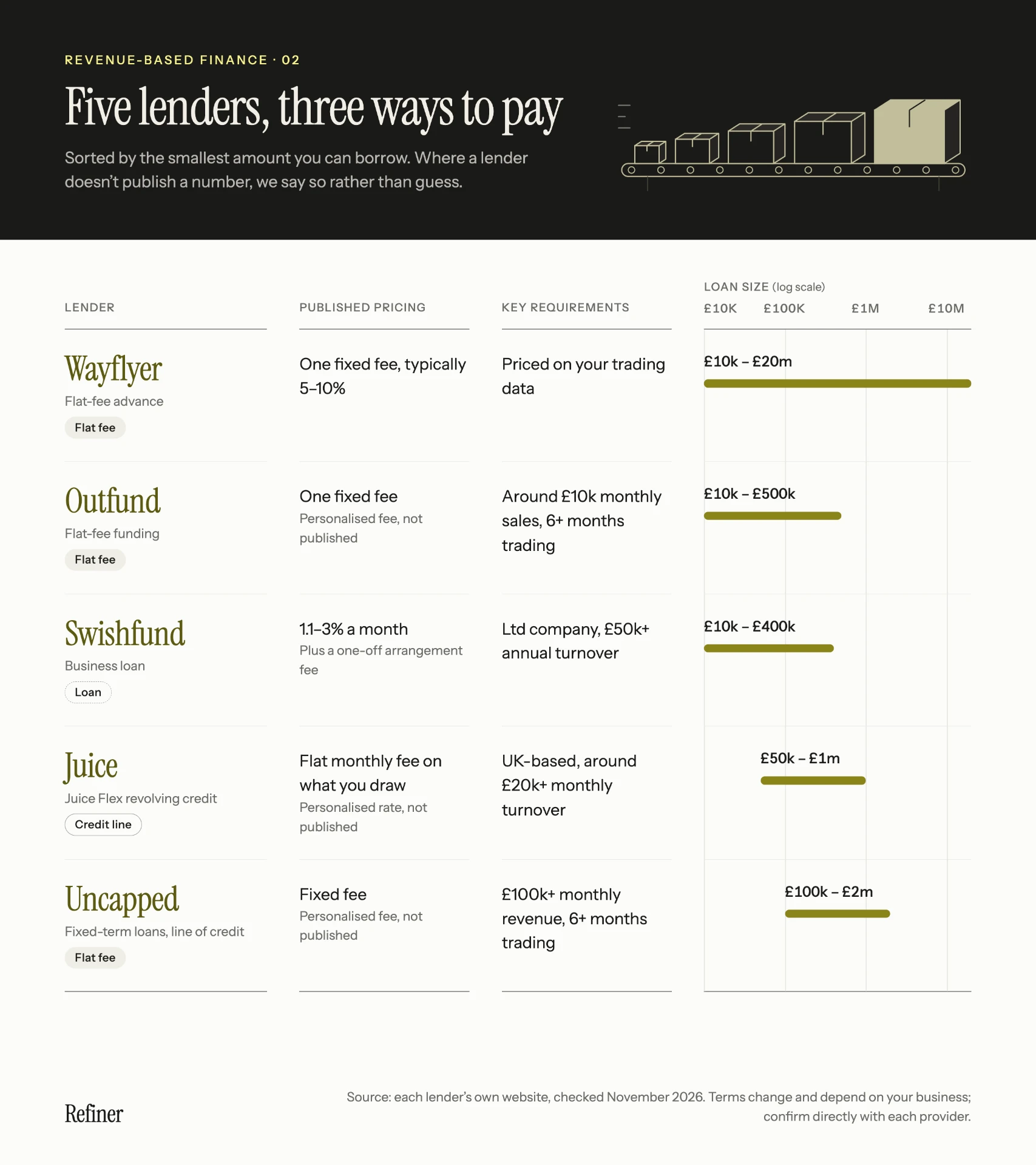
Every figure below comes from the lender's own website. Lenders are sorted by the smallest amount you can borrow. Where a lender doesn't publish a number, we say so rather than guess.
| Provider | Product | Size | Published pricing | Key requirements |
|---|---|---|---|---|
| Wayflyer | Flat-fee advance | £10k to £20m | One fixed fee, typically 5–10% | Priced on your trading data |
| Outfund | Flat-fee funding | £10k to £500k | One fixed fee; personalised fee, not published | Around £10k monthly sales, 6+ months trading |
| Swishfund | Business loan | £10k to £400k | 1.1–3% a month, plus a one-off arrangement fee | Ltd company, £50k+ annual turnover |
| Juice | Juice Flex revolving credit | £50k to £1m | Flat monthly fee on what you draw; personalised rate, not published | UK-based, around £20k+ monthly turnover |
| Uncapped | Fixed-term loans, line of credit | £100k to £2m | Fixed fee; personalised fee, not published | £100k+ monthly revenue, 6+ months trading |
Wayflyer: the ecommerce specialist
Wayflyer lends £10k to £20m to UK ecommerce brands for one fixed fee, typically 5–10% of the advance. On its own example, a $100k advance with a 6% fee means repaying $106k, collected as a share of daily sales.
There are no application, setup, maintenance, late payment or early repayment fees, and its UK page says no personal guarantee is required. Best for: a defined push, such as a big stock order before Q4 or a launch campaign, where you know the payback.
Outfund: the flat-fee option for smaller brands
Outfund funds £10k to £500k for businesses with around £10k in monthly sales and at least six months' trading. You choose between repaying as a share of sales or in fixed instalments, and you can pick the term and level of security. Offers arrive within three days. Best for: growing brands that want a fixed cost and flexible repayments.
Swishfund: a general business loan
Swishfund isn't ecommerce-specific, but it's a fast option for limited companies with £50k+ turnover and at least one set of filed accounts. Loans run up to 24 months at 1.1–3% a month plus a one-off arrangement fee. You can repay early without a settlement fee, though interest runs to the end of that month.
Juice: the flexible credit line
Juice's main product, Juice Flex, is a revolving credit facility from £50k to £1m. You draw what you need, repay, and draw again. There's no expiry and no mandatory top-ups, and you pay a flat monthly fee only on what you've drawn.
Each draw can be repaid over up to 24 months, or you can pay just the monthly fee and repay the draw at the end. There's no debenture under £150k and no penalty for repaying early. Smaller businesses can look at Juice Now, which lends up to £150k repaid monthly over up to 12 months.
One thing to know: this is a credit line, not classic revenue-based finance. Each draw has agreed repayment terms rather than a share of sales. Best for: established brands that need capital again and again, such as stock every season or ad spend every month.
Uncapped: for bigger brands
Uncapped lends £100k to £2m through fixed-term loans and a line of credit, for a fixed fee agreed upfront. You'll need at least £100k in monthly revenue (£10k for its Amazon seller product) and six months' trading. It asks for no personal guarantee and gives decisions within 48 hours. Best for: established brands raising six or seven figures.
Selling on Shopify or Amazon? Check your dashboard
Shopify Capital offers UK merchants a cash advance repaid from a share of daily sales. It's invitation-only: if you're eligible, the offer appears in your Shopify admin. Amazon sellers may also see cash advance offers in Seller Central, provided through its partner YouLend. These are easy to accept, but you can't negotiate the terms.
Which one fits you?
| Your situation | Look at first |
|---|---|
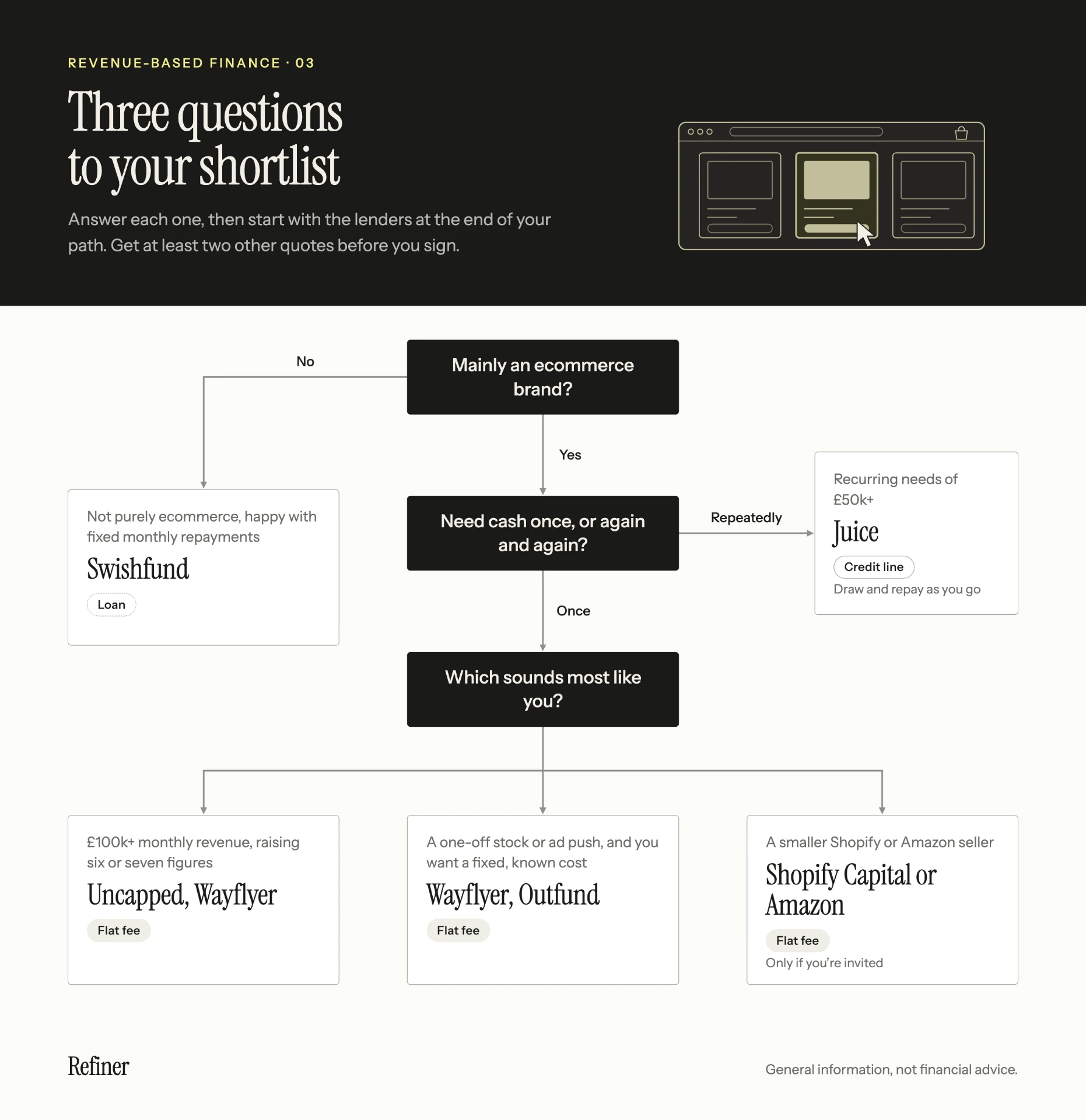
| Not purely ecommerce, happy with fixed monthly repayments | Swishfund |
| Recurring needs of £50k+, want to draw and repay as you go | Juice |
| £100k+ monthly revenue, raising six or seven figures | Uncapped, Wayflyer |
| A one-off stock or ad push, and you want a fixed, known cost | Wayflyer, Outfund |
| A smaller Shopify or Amazon seller | Shopify Capital or Amazon, only if you're invited |
Five questions to ask before you sign
- What's the annual cost? Convert every flat fee and monthly rate into a yearly figure. It's the only fair comparison.
- What happens if I repay early? On a credit line, repaying early cuts your cost. With a flat fee, you usually pay the full fee whenever you repay.
- Is there a personal guarantee or a debenture? These vary widely, and they're where the real risk sits.
- What share of daily sales goes to repayments? Too high and you'll starve next month's ad budget.
- Have I got at least two other quotes? Pricing depends on your margins and how steady your revenue is. Lenders expect you to shop around.
Funding is fuel. Your growth engine still has to run.
Here's the part most funding guides skip: RBF only pays off if the money turns into profitable revenue fast. Borrow £100k at 8% and pour it into ads with a weak return, and you've paid for the privilege of shrinking your margin.
The brands that get the most from growth capital already know their numbers: customer acquisition cost, payback period, contribution margin by channel. That matters to lenders too: Wayflyer, for one, sets its fee based on your financial health and trading history.
That's where we come in. At Refiner, we build the growth strategy, marketing delivery and reporting that make every pound of funding work harder. Thinking about raising growth capital? Talk to us first, and make sure the engine is ready for the fuel.
This article is for general information, not financial advice. Figures come from each lender's own website, checked in November 2026. Terms change and depend on your business, so confirm current offers directly with each provider.
Sources
Citation
Written by Alex Lawford, founder of Refiner Agency.
Lawford, A. (12 November 2026). Revenue-Based Finance in the UK: Juice, Wayflyer, Outfund & More Compared. Refiner Agency. https://refineragency.com/insights/revenue-based-finance-uk-compared
Related service
Growth frameworks